
Many international buyers are surprised to discover that their Chinese-made XCMG excavator or Shantui bulldozer is powered by a globally recognized Cummins engine. At Top Run Machinery, we often field questions from clients in Africa and the Middle East who expect a purely domestic engine but find a Cummins nameplate instead. Understanding the synergy between Cummins technology and Chinese heavy equipment is critical for long-term maintenance and efficient sourcing of cummins engine parts for construction equipment.
The decision by Chinese Original Equipment Manufacturers to use Cummins engines is a strategic one. For decades, Cummins has maintained a major manufacturing footprint in China through joint ventures like Dongfeng Cummins and Chongqing Cummins. This local production allows brands like XCMG and Shantui to combine affordable Chinese machine platforms with globally trusted powertrain technology.
For the end user, this means the frame, hydraulics, and cab may be Chinese, but the engine is supported by a worldwide service network. Whether you are running a compact loader in Southeast Asia or a heavy bulldozer in Latin America, finding a cummins engine overhaul kit is usually easier than sourcing niche domestic powertrain parts. The catch is that these engines often carry machine-specific local modifications, and that is where buyers make mistakes.
Reliability is the main reason. Construction sites are unforgiving environments where dust, heat, vibration, and long operating hours are standard. Cummins engines, especially the B and C series, have proven their durability over millions of working hours. When a Shantui SD16 bulldozer is pushing in desert conditions, the torque delivery and cooling stability of a Cummins 6BT5.9 engine are what keep the machine productive.
Serviceability is the second advantage. A mechanic in a remote quarry may not know a rare domestic engine well, but they will often understand how to troubleshoot a Cummins fuel system, replace a starter motor, or identify a failing water pump. That global familiarity reduces downtime and gives international buyers more confidence in Chinese heavy equipment.
To help fleet managers identify their needs quickly, the table below summarizes the most common Cummins engine families found in XCMG and Shantui machinery. Identifying the correct engine family is the first step in ordering accurate cummins 6BT parts, ISF consumables, or a complete overhaul package.
| Engine | Displacement | Power Range | Common Applications |
|---|---|---|---|
| Cummins ISF2.8 | 2.8L | 74-100kW | Light loaders, small excavators, light trucks |
| Cummins ISF3.8 | 3.8L | 100-130kW | XCMG XE150D, medium loaders, Foton trucks |
| Cummins 6BT5.9 | 5.9L | 110-173kW | Shantui SD16/SD22, XCMG graders, Liugong loaders |
| Cummins 6CT8.3 | 8.3L | 162-224kW | Large excavators, heavy loaders, XCMG QY50K cranes |
| Cummins QSM11 | 10.8L | 261-373kW | XCMG LW800K, large truck cranes, mining trucks |
| Cummins QSK19 | 18.9L | 448-597kW | Shantui SD52, large-scale mining equipment |
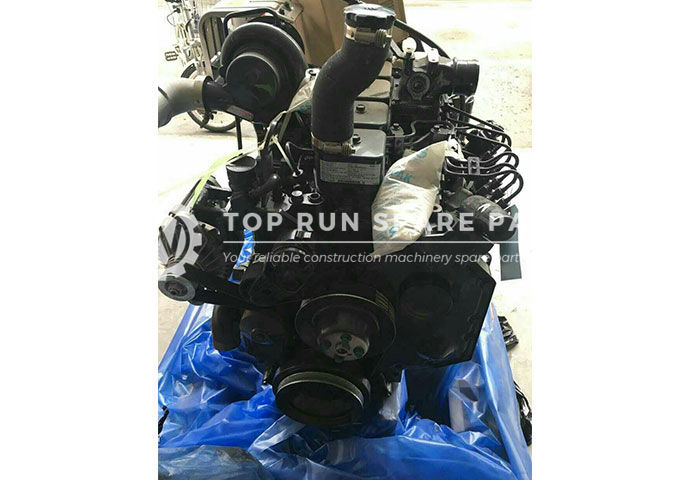
A common mistake is assuming that a standard Cummins number from a US or European catalog will always fit a Chinese-built machine. While the core block and major internals such as the piston ring set or crankshaft are often identical, Chinese OEMs regularly request modifications to external bolt-on parts so the engine fits the machine layout.
For example, an XCMG truck crane using a 6CT8.3 may need a unique alternator bracket or a differently angled turbocharger outlet to clear hydraulic tanks and surrounding structure. If you order only by engine family without checking the machine model and serial number, you can receive a correct Cummins part that simply will not bolt into place.
That is why we cross-reference Cummins data with OEM parts catalogs from XCMG and Shantui. This ensures the starter motor, water pump, and other external assemblies are correct not just for the engine, but for the exact machine configuration.
When an engine reaches high hours or suffers internal damage, a partial repair is rarely the most economical solution. A complete cummins engine overhaul kit gives the best chance of restoring factory compression, oil control, and service life. A professional-grade kit should include the following components.
Buying a matched kit is better than assembling random pieces from different sources. It reduces the risk of installing a new piston against a worn bearing shell or using a gasket set that does not match the exact liner height and head specification. You can also browse our broader engine parts page when comparing package options.
Preventive maintenance is the key to avoiding a costly rebuild. The five components below are the ones we see fail most often on export-market machines using Cummins power.
Modern Cummins ISF and QSB variants use high-pressure common rail systems. A failing fuel injector usually shows up as hard starting, black smoke, uneven idle, or poor throttle response. Contaminated fuel remains the most common cause on remote job sites.
The turbocharger lives under extreme heat and shaft speed. A whining noise, sudden loss of power, or oil residue inside the intake piping often points to failing seals or bearings. Before condemning the turbo, always check the air side and replace the filter kit if airflow restriction is present.
A worn water pump can cause fast temperature spikes, coolant leaks, or bearing noise. On heavy-duty applications, replacing the water pump during major service intervals is often cheaper than risking an overheating event in the field.
If you find a milky mixture in the cooling circuit or traces of coolant in the oil, the oil cooler core may have failed. Once cross-contamination starts, the engine can suffer major internal damage quickly if operation continues.
Heavy vibration, dirty environments, and repeated hot starts are hard on electrical accessories. If the machine clicks but will not crank, or if batteries are no longer charging during operation, inspect the starter motor and alternator first. For undercarriage and bulldozer-specific wear items, you can also visit our Shantui parts section.
The simplest way to extend Cummins engine life is disciplined filtration. A standard filter kit including oil, fuel, and air filters should be replaced according to operating hours, not only according to visible dirt. In quarry, mining, and road-building environments, air filters often need to be changed more frequently than the standard manual interval.
Using genuine or reliable OEM-grade filters keeps fine contaminants out of the fuel system and away from cylinder walls. A cheap fuel filter might save a few dollars today but can cost far more in injector and pump damage later.
In many cases, yes. DCEC and CCEC produce engines under Cummins licensing, and many internal core parts are interchangeable. External assemblies such as manifolds, brackets, and the starter motor can vary, so the engine serial number should always be verified before ordering.
Manufacturers configure export and domestic machines differently based on emissions rules, service expectations, and customer preference. The Cummins 6CT8.3 is popular in many export markets because of its broad support network, while other regions may use Weichai as the standard option.
A top overhaul focuses on the head, valves, and gaskets. A full overhaul adds pistons, liners, and bearings. Heavy blow-by, low compression, or persistently low oil pressure usually indicate the need for a complete cummins engine overhaul kit rather than a limited top-end repair.
Whether you manage a fleet of XCMG excavators or a single Shantui bulldozer, our team can help you match the right Cummins service parts the first time. Send us your machine model, engine serial number, and photos of the failing assembly so we can confirm fitment before shipment. Contact us through our contact page or email eric@toprunsparepart.com for a fast quote.


