


oil pipe cover B00745+ZL30: Identification and Ordering Guide
oil pipe cover B00745+ZL30 is the catalog reference for this page. The details below are written for purchasing and service teams who need to match an existing component, not for guessing from a broad machine family. This catalog entry identifies oil pipe cover B00745+ZL30 under reference B00745 ZL30. The available record names Foton Lovol ZL30 but does not establish a serial-range application. Use the visible component marking, machine nameplate and parts-diagram position together. This page explains what can be checked for component identification and parts matching, which details remain unconfirmed, and what evidence to send with a quotation request. It does not claim dimensions, performance values, interchangeability or package contents that are not shown in the product record.
Start with the number and nameplate where they are available; then compare the machine, assembly and interfaces. If the record does not state a dimension, electrical value, supply scope or serial break, treat that information as unconfirmed and ask for it before order release.
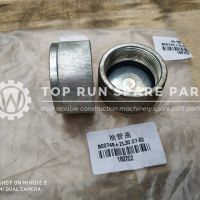
| Order check | Current record | Evidence to compare |
|---|---|---|
| Product | oil pipe cover B00745+ZL30 | Old-part label and machine parts illustration |
| Reference | Not stated in the verified product record | Nameplate, stamped mark or original-part marking |
| Fitment | Foton Lovol ZL30 (record field; verify the exact machine serial and assembly position before ordering) | Machine model, serial and assembly revision |
| Package scope | Catalog does not itemize accessories | Confirm quantities and included items on the quotation |
What the record confirms about oil pipe cover B00745+ZL30
The product record names this item as “oil pipe cover B00745+ZL30” and records the reference “B00745 ZL30”. That is the evidence available for identifying this listing. The category label “Lovol Excavator” describes where the CMS places the item; it is not, by itself, proof that the component fits every machine in that brand or category. The model field contains “Foton Lovol ZL30”; treat it as a lead for checking, not as a confirmed fitment statement until the machine serial and diagram callout agree. For a buyer, the useful next step is to match the old-part marking and physical interface with the official parts illustration for the actual machine. A supplier should confirm the part identity and the quoted supply scope in writing before the order is released.
The source record does not give enough verified detail to publish dimensions, material, rated output, pressure, voltage, connector pinout, port size, temperature range, production revision or serial break for this item. Those omissions matter for component identification and parts matching: items with similar names can differ at the mounting face, internal profile, connector, orientation or assembly revision. There is also an ambiguity in the current reference fields, so this page deliberately does not turn the text into a single structured MPN. Do not use a generic category, a photo alone or a nearby part number as a substitute for the equipment parts book. Ask the seller to check the complete machine serial, diagram position and the relevant interface details; retain that response with the quotation.
That distinction is important when equipment is maintained across more than one model year or configuration. A useful product page can explain what to compare, but it cannot replace the parts book for the exact serial range. Keep the inquiry tied to the machine that will receive the part; do not merge details from another unit merely because its name looks similar.
Identification evidence for component replacement
The fastest way to reduce back-and-forth is to send a compact evidence set with the first inquiry. Use the checklist below as a job-preparation step, and label each image with the component or position it shows.
Photograph the full machine nameplate and record its serial exactly as shown.
Capture the component marking straight-on; include suffixes, punctuation and both sides if relevant.
Take one wider image that shows the component's location and orientation in the assembly.
Record the parts-diagram page, item number and assembly revision for the actual machine.
For a filter, pump, valve or radiator, identify circuit position and visible ports without guessing specification values.
For an electrical item, photograph connector keying and compare the wiring-diagram reference before connection.
State quantity, destination and requested delivery timing; ask the quotation to list unresolved fitment points.
State the requested quantity and whether the old item is available for side-by-side inspection.
Ask the supplier to list any unresolved fitment point directly on the quotation.
Fitment checks for this catalog component
The principal fitment risk is confusing a catalog label with a complete application. Before purchase, compare the exact characters on the old component with the listing, including prefix, suffix, punctuation and any left/right or revision marker. Check where it sits in the assembly and whether the requested item is a standalone component, a repair kit or part of a larger unit. Although “Foton Lovol ZL30” appears in the model field, the precise serial range and position are not documented here. If two numbers or descriptions appear in the record, keep them as separate clues until the equipment documentation confirms their relationship; do not assume interchangeability.
When a part number is present, compare it character by character, including hyphens, suffixes and multiple references. When the number field is blank or contains an instruction to verify, do not turn that wording into a fabricated MPN. Use the equipment identification and physical evidence to establish the item, then keep the confirmation with the work order.
Dimensions can help, but they are meaningful only when the measuring points are clear. Record the unit, the point-to-point location and the orientation of the measurement. For electrical or hydraulic parts, a photo of the connector or port layout is not a substitute for the wiring or circuit diagram; it is supporting evidence for the technician and supplier.
Service workflow for component identification and parts matching
For a component identification and parts matching job, begin with the symptom and the inspection evidence rather than replacing a component based on a broad description. Record the machine hours, warning or fault indication if applicable, when the issue occurs, and what the technician has already inspected. For a mechanical assembly, note visible wear, looseness, leakage or damage and the component's orientation. For an electrical or hydraulic item, record the connector or port arrangement and consult the correct diagram and service information. The part record does not provide test thresholds or adjustment values, so use the manufacturer's procedure and suitable qualified personnel. Once the removed item is identified, compare its marking with the quotation and confirm the package scope before installation.
Separate observed symptoms from the suspected cause in the repair request. “Intermittent,” “leaking,” “slow” or “no response” describe what someone sees; they do not alone prove which component has failed. Preserve fault notes, inspection images and any test results that the technician considers appropriate. This makes a later inquiry easier to trace and helps prevent unnecessary repeat orders.
A practical quotation scenario for oil pipe cover B00745+ZL30
Consider a workshop preparing a planned repair and finding that the removed item carries a marking that is only partly legible. The purchasing team can avoid a guess by sending the complete machine plate, a close image of the marking, a wider image showing the installation position and the relevant parts-diagram callout. If the machine is still assembled, the technician can record connector, port or mounting orientation before removal. The supplier can then state whether the requested reference matches and list any remaining uncertainty on the quotation. This is a practical example of an identification workflow, not a claimed customer case or proof that this listing fits a specific machine.
This is an example of a verification workflow, not a reported customer case or a promise that the listed part will correct a fault. If the diagnosis changes after disassembly, update the parts request before shipment. If the component is part of a larger assembly, ask whether the supplier is quoting the complete assembly or only the identified subcomponent.
Receiving and installation checks for catalog component
At receiving, compare the delivered label and component markings with the approved order line. For catalog component, inspect the relevant interfaces only against the confirmed drawing: mounting, connection and identification features against the approved service information. Quarantine a mismatch and photograph it before the part is mixed into workshop stock. During installation, follow the correct service manual, cleanliness requirements and specified tools; obtain torque, pressure, adjustment and commissioning values from authoritative service information because this record does not state them.
Before installation, compare the supplied item with the written confirmation and approved service information. Keep machined, sealing, electrical or hydraulic interfaces protected until the work area is ready. Use the correct tools and procedures for the equipment; where a torque, pressure, calibration, clearance or adjustment value is not published in the record, obtain it from the proper technical source rather than estimating it.
Packaging and traceability for B00745 ZL30
For order traceability, request that the quotation and package label repeat the verified item reference, quantity and agreed supply scope. Protect precision surfaces and keep small pieces separately bagged and identified if they form part of the confirmed package. On a multi-line shipment, preserve the mapping between each carton and work-order line; record the received quantity and visible condition before unpacking further. If an item arrives with an unclear or conflicting label, hold it for review rather than changing the stock code based on appearance. These steps support orderly receiving and make any supplier follow-up more precise without implying a particular export packing standard or certification for this listing.
For a multi-item order, keep each component matched to its part number and work-order line. Small seals, clips, connectors or fittings should be individually identified if included. Photograph the carton labels and item markings at receiving, check quantities against the packing list, and document any transit damage before the part is mixed with workshop stock.
Related product references
The linked catalog entries can help compare adjacent service items, but a related page is not evidence of interchangeability. Confirm each application independently: 9D650-36A020000A0 Lovol booster assy; oil sump.
Frequently asked questions
What should I send to confirm this part?
Send a readable machine nameplate with model and serial, the old component marking, a wider photo showing its installed position, the applicable parts-diagram callout and the required quantity. For hydraulic or electrical parts, include clear images of ports or connectors. Ask the supplier to state in writing which evidence was matched and what details remain unconfirmed.
Does the category or model field guarantee fitment?
No. A category organizes the listing, while a model field can be incomplete or may repeat a product description. Confirm the exact machine serial, assembly revision and diagram position before purchase. The source record does not define a complete serial-range fitment statement.
Are dimensions, ratings or included accessories specified here?
The current product record does not verify those specifications or the full package contents. Do not infer them from a similar listing or image. Request the applicable drawing or written quotation details, including measurements, ratings, quantity and any included hardware or seals, before releasing the order.
Can a related product link confirm interchangeability?
No. Related links help navigate the catalog; they are not an interchangeability chart. Check every part number and application independently against the machine documentation and obtain written confirmation when references differ.
What to send for a confirmed quotation
Include the full machine model and serial, the complete engine or chassis plate where relevant, the product or old-part marking, clear photos of mounting and connection points, and any applicable diagram callout. State the quantity and required supply scope. If a number is missing, say so; a legible photo and a specific question are more useful than an invented part number. For cross-border shipments, also state the destination and the timing required for the maintenance plan.
Once the identity and scope are confirmed, keep the supplier’s written response with the order documents. That record helps the receiving team reconcile the item and gives the technician a clear basis for pre-installation checks.


