


YTO Engine Muffler: Fitment, Routing and Sourcing
YTO Engine Muffler is listed for YTO equipment service. This page is a practical sourcing brief, not a substitute for an engine parts catalogue or workshop manual. The catalog record identifies the component, but does not state every engine variant, dimension or package inclusion. Confirm the application with the full machine and engine identification before placing an order.
For procurement teams, the useful question is not simply whether a part is described as “YTO.” It is whether the proposed item matches the exact assembly, service condition and job scope. The checks below help a buyer, mechanic and supplier exchange the information needed to confirm that match.
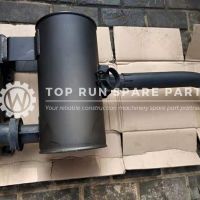
What this component does—and what the listing does not tell you
An engine muffler routes exhaust and reduces sound through an internal passage design. The catalog title does not state the engine code, dimensions, inlet orientation or mounting style. These details determine whether the unit can connect to the exhaust pipe and fit safely within the machine’s available space.
A muffler can look similar while having a different outlet angle, pipe diameter, bracket position or body length. A mismatch can create installation strain, exhaust leakage or interference with nearby parts. Confirm clearance and routing using the machine layout and existing component.
That distinction matters in export parts purchasing. A short title is useful for finding a record, but it is not a complete technical specification. If a dimension, material, calibration, configuration, included accessory or engine serial range is not shown in the product data, treat it as unconfirmed. A buyer should ask for the missing detail rather than fill it in from a generic web description.
Identification details to collect before requesting a quotation
Record the engine and machine identification plates. Measure inlet/outlet diameters and center-to-center mounting points. Photograph the body, pipe orientation, brackets and heat shields. Check exhaust routing and nearby hoses, wiring or body panels. Confirm any included clamps, gaskets and brackets in the quotation.
When photos are available, take one wide image that shows where the component sits and several close images of labels, castings, ports, connectors or mating surfaces. Include a scale only when it does not obscure the feature being measured. Send the original image files where possible; compressed screenshots can make stamped characters difficult to read.
A practical pre-order checklist for the workshop and buyer
Use the complete machine and engine identification rather than a shortened model description.
Cross-check the item against the correct parts diagram or service record.
Keep the removed component available until the replacement identity is confirmed.
Ask the supplier to state inclusions and exclusions on the quotation.
Photograph labels and interfaces before cleaning or disassembly.
Record measurement units and measurement locations instead of sending numbers without context.
Ask the supplier to flag any unresolved application question before dispatch.
Keep the confirmed quotation and part identification with the repair work order.
Exhaust noise or heat concerns should be assessed alongside pipe condition, supports and leakage points. A loose bracket or cracked pipe may be mistaken for a muffler failure. During service, inspect the full exhaust path and identify whether the muffler alone or its connecting hardware requires replacement.
These steps do not guarantee compatibility by themselves; they create a traceable basis for a qualified fitment decision. Where the machine is safety-critical or a dimension affects engine operation, the final confirmation should come from the equipment maker’s documentation, an authorized technical source or a competent repair specialist.
Receiving inspection and installation planning
Before installation, compare the replacement’s dimensions and mounting to the old unit and ensure the exhaust path will not load the engine manifold or pipe joints. Use specified seals and supports and check for leaks after installation. Exhaust work should be performed on a cool engine with appropriate safety practices.
Before the part is installed, compare it with the approved drawing or the removed original and record any difference. Check that the work area, fasteners, seals and related consumables are ready. If the component has a calibration, torque, cleanliness, clearance or alignment requirement, use the applicable service information and suitable tools. A product page should help the buyer identify what to ask; it should not invent a setting or replace the technician’s procedure.
Example service situation: diagnose first, then source
A tractor operating near a workshop may develop louder exhaust noise after a support bracket loosens. The service team checks the pipe, joints and muffler body before ordering. Measurements and photos of the existing routing let procurement confirm orientation and mounting, rather than selecting by the word “muffler” alone.
This example describes a sensible workflow, not a claimed customer case or a promise that this part will resolve a particular symptom. Diagnosis should establish the failed component before procurement commits to a replacement. If inspection reveals damage to an adjacent part, update the work order and ask the supplier to quote those items separately so the cause and repair scope remain clear.
Packaging, shipment and delivery checks
The muffler body and pipe ends need support against dents and impact; brackets should not bear the full parcel load. Request protection for open connections and stable blocking. At delivery, inspect the body and mounting tabs before discarding packaging.
For a consolidated export shipment, the purchase order should connect each carton to the correct item and work order. Ask for labels that preserve the visible product identity and part number, and make sure small seals, fittings or accessories are individually bagged rather than loose in a larger box. On delivery, photograph external damage, verify quantities against the packing list and report discrepancies before parts are mixed into workshop stock.
Related catalog references—use them for comparison, not substitution
These internal product pages may help organize a related maintenance request, but each is a distinct catalog record. They are not automatically interchangeable with YTO Engine Muffler. Confirm each item independently using its own engine application and part identity: YTO exhaust valve R010002 and YTO cylinder-head gasket L4R.010011S.
Frequently asked questions
What engine does this muffler fit?
The current entry does not name an exact engine code. Verify the engine plate, old component dimensions and parts diagram before ordering.
Can I use a muffler with the same pipe diameter?
Diameter alone is not enough. Body size, outlet direction, mounting points, clearance and exhaust routing also need to match.
Are clamps and gaskets included?
The listing title does not define accessories. Confirm each clamp, gasket, bracket and heat shield on the quotation.
What should be checked after installation?
A qualified technician should confirm secure supports, safe clearance and exhaust-joint sealing according to the service procedure.
What to include in your inquiry
To request availability or a quotation, send the machine model and serial information, the complete engine plate, the original number or casting mark, clear photos of the old component and any relevant dimensions. State the quantity, destination country and whether you need the component alone or a defined kit. If the part is already removed, note its condition and retain the label or packaging. The more precisely the request describes the actual assembly, the easier it is to identify unanswered fitment questions before shipment.
Top Run can review the identifying information and confirm what is available for quotation. Final compatibility should be agreed against the equipment documentation and the supplied part details before installation.


