


Shantui Bulldozer Cable | Verify 16Y / 6Y-26C-05000
Shantui Bulldozer Cable | Verify 16Y / 6Y-26C-05000 is the catalog reference for this page. The details below are written for purchasing and service teams who need to match an existing component, not for guessing from a broad machine family. The title and image show 16Y-26C-05000, but the Part Number field says 6Y-26C-05000. Confirm the correct marking before purchase. Confirm the correct assembly drawing, equipment serial and supplied scope before purchase.
Start with the number and nameplate where they are available; then compare the machine, assembly and interfaces. If the record does not state a dimension, electrical value, supply scope or serial break, treat that information as unconfirmed and ask for it before order release.
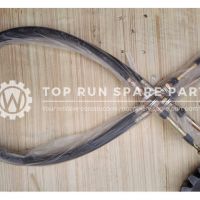
| Order check | Current record | Evidence to confirm |
|---|---|---|
| Product | Shantui Bulldozer Cable | Verify 16Y / 6Y-26C-05000 | Old-part label and equipment parts illustration |
| Reference | Not stated in the verified product record | Nameplate, stamped mark or original-item label |
| Fitment | Shantui > Bulldozer parts category; exact model and serial range are not specified. | Machine model, serial and assembly version |
| Package scope | Catalog does not itemize accessories | Confirm each quantity and included item on the quotation |
Follow the cable from label to connector
A cable assembly may be defined by its ends, routing and assigned function. Similar length or appearance does not establish that the connector and circuit are the same.
Length, pinout, voltage and function are absent. On this record, title/image and the separate part field disagree, so the identifier must be verified before purchase.
That distinction is important when equipment is maintained across more than one model year or configuration. A useful product page can explain what to compare, but it cannot replace the parts book for the exact serial range. Keep the inquiry tied to the machine that will receive the part; do not merge details from another unit merely because its name looks similar.
Resolve the title/field reference conflict
The fastest way to reduce back-and-forth is to send a compact evidence set with the first inquiry. Use the checklist below as a job-preparation step, and label each image with the component or position it shows.
A cable assembly may be defined by its ends, routing and assigned function. Similar length or appearance does not establish that the connector and circuit are the same.
Length, pinout, voltage and function are absent. On this record, title/image and the separate part field disagree, so the identifier must be verified before purchase.
Photograph both ends, connector keys, clips and routing before removal. Use the machine wiring or control diagram and record symptoms separately from a suspected cable fault.
Compare connector faces and keying with the approved order before connection; any continuity or functional test must follow the correct circuit instructions.
Cap connector contacts, avoid tight bends, support fittings against strain and keep each cable label visible in the carton.
State the requested quantity and whether the old item is available for side-by-side inspection.
Ask the supplier to list any unresolved fitment point directly on the quotation.
Do not infer function from the route alone
Photograph both ends, connector keys, clips and routing before removal. Use the machine wiring or control diagram and record symptoms separately from a suspected cable fault.
When a part number is present, compare it character by character, including hyphens, suffixes and multiple references. When the number field is blank or contains an instruction to verify, do not turn that wording into a fabricated MPN. Use the equipment identification and physical evidence to establish the item, then keep the confirmation with the work order.
Dimensions can help, but they are meaningful only when the measuring points are clear. Record the unit, the point-to-point location and the orientation of the measurement. For electrical or hydraulic parts, a photo of the connector or port layout is not a substitute for the wiring or circuit diagram; it is supporting evidence for the technician and supplier.
Service notes for Shantui Bulldozer Cable | Verify 16Y / 6Y-26C-05000
Ask for written confirmation of the correct reference using the machine serial, old-part label and connector photos. Never guess terminal assignments or energize an unidentified cable.
Separate observed symptoms from the suspected cause in the repair request. “Intermittent,” “leaking,” “slow” or “no response” describe what someone sees; they do not alone prove which component has failed. Preserve fault notes, inspection images and any test results that the technician considers appropriate. This makes a later inquiry easier to trace and helps prevent unnecessary repeat orders.
A quote scenario using 6Y-26C-05000
A practical enquiry for Shantui Bulldozer Cable | Verify 16Y / 6Y-26C-05000 begins with the exact catalog line, equipment serial and a photograph of the installed item. There is a material catalog conflict on this page: the title and image label show 16Y-26C-05000, while the Part Number field reads 6Y-26C-05000. Neither version is silently treated as correct here. Match the physical cable label, both end connections and the equipment drawing, then ask for a written confirmation of the exact supplied reference before releasing an order. The quotation should state the confirmed reference and every included component.
This is an example of a verification workflow, not a reported customer case or a promise that the listed part will correct a fault. If the diagnosis changes after disassembly, update the parts request before shipment. If the component is part of a larger assembly, ask whether the supplier is quoting the complete assembly or only the identified subcomponent.
Receiving checks for Shantui Bulldozer Cable | Verify 16Y / 6Y-26C-05000
Compare connector faces and keying with the approved order before connection; any continuity or functional test must follow the correct circuit instructions.
Before installation, compare the supplied item with the written confirmation and approved service information. Keep machined, sealing, electrical or hydraulic interfaces protected until the work area is ready. Use the correct tools and procedures for the equipment; where a torque, pressure, calibration, clearance or adjustment value is not published in the record, obtain it from the proper technical source rather than estimating it.
Packing and traceability for this part
Cap connector contacts, avoid tight bends, support fittings against strain and keep each cable label visible in the carton.
For a multi-item order, keep each component matched to its part number and work-order line. Small seals, clips, connectors or fittings should be individually identified if included. Photograph the carton labels and item markings at receiving, check quantities against the packing list, and document any transit damage before the part is mixed with workshop stock.
Related product references
The linked catalog entries can help compare adjacent service items, but a related page is not evidence of interchangeability. Confirm each application independently: Cable 16Y-05C-01000; Bulldozer heat motor identification page.
Frequently asked questions
Does the page identify the cable function and pinout?
No. Use the installed label and correct circuit diagram. For this record, the reference to retain is 6Y-26C-05000.
What if the title and part field disagree?
Pause and obtain written confirmation against the original label or drawing. For this record, the reference to retain is 6Y-26C-05000.
Can the cable be matched by length alone?
No. Connectors, routing and pinout also matter. For this record, the reference to retain is 6Y-26C-05000.
What should be photographed before removal?
Photograph both ends, connector faces, clips and route. For this record, the reference to retain is 6Y-26C-05000.
What to send for a confirmed quotation
Include the full machine model and serial, the complete engine or chassis plate where relevant, the product or old-part marking, clear photos of mounting and connection points, and any applicable diagram callout. State the quantity and required supply scope. If a number is missing, say so; a legible photo and a specific question are more useful than an invented part number. For cross-border shipments, also state the destination and the timing required for the maintenance plan.
Once the identity and scope are confirmed, keep the supplier’s written response with the order documents. That record helps the receiving team reconcile the item and gives the technician a clear basis for pre-installation checks.


